
The stain shows up first
Nobody calls about a chimney leak in July. The call comes the morning after the first proper storm of the season: a tan blotch on the drywall beside the mantel, a musty smell from the hearth, rust flakes on the firebox floor, or a bucket under a drip in the attic. In San Fernando the long dry summer bakes sealant, metal and mortar for months, and the first heavy rain finds whatever gave way.
Owners usually ask two things straight off. Where is it coming from, and what will it cost? This post answers both from the repair side: the likely sources, what we do about each one, the figures we publish, and what an extra winter of dripping adds to the job.
Five places the water gets in
A chimney is a brick column pushed up through a roof, and every edge of it is a joint the weather works on. These are the sources we trace most often on valley houses:
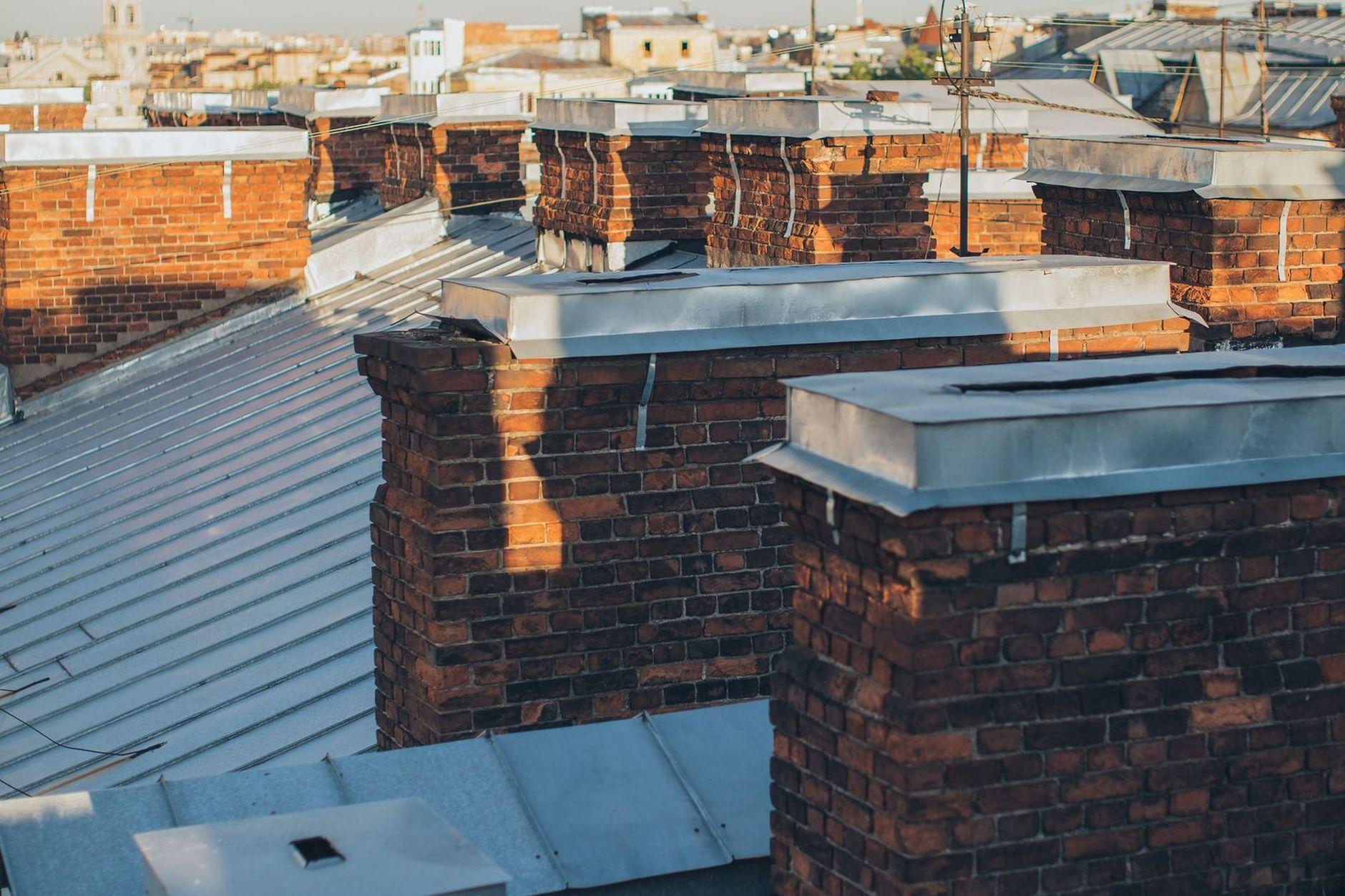
- The metal at the roof line. Sheet metal bridges the gap between shingles and brick. Old caulk dries out, nails back out, and the roof and the chimney move at different rates in heat. This is where we find the fault more often than anywhere else.
- The slab on top. The poured or troweled top of the chimney cracks after years of hot afternoons and cool nights. Every crack becomes a funnel aimed at the brick below it.
- An open flue. With nothing over the opening, a storm drops straight into the flue, pools on the shelf above the damper and rusts the damper plate. The stain often shows on the firebox walls rather than the ceiling.
- Worn joints and porous brick. Wind-driven rain gets pushed sideways into eroded mortar. Old soft brick drinks it in and lets it through to the framing.
- The high side of a wide stack. A broad chimney partway down a slope dams the water running toward it. On a stack wider than about 30 inches, a small diverter called a cricket is the usual answer.
How we trace it before we touch it
Repairing the wrong source is the most expensive mistake in leak work, so we never start with a ladder and a caulk gun. We start where you see the water, then go up into the attic and look at the wood around the chimney for dark streaks, soft decking and rusted nails. Those marks point uphill toward the source.
On the roof we check the metal, the top slab, the flue opening and the brick face. If the cause still is not obvious, we soak the roof in sections from the bottom up, with someone in the attic calling out the moment a drip appears. That way the repair goes on the joint that actually failed, not the one that looks worst from the street.
What decides the price
Our leak range is wide because a leak can be one tired seam or three faults stacked on top of each other. The low end covers a single source, such as one side of the metal pulled loose. The high end covers several sources at once, or brick above the roof that has to be relaid before new metal will hold.
Here is how our published figures line up against the likely fixes:
- Traced leak, fixed at its source: $530 to $3,150
- Diverter fitted on the uphill side of the stack: $420 to $950
- Diverter plus new metal on all four sides: $635 to $1,600
- Hood and screen over an open flue: quoted after we measure
- Camera check of the flue after water damage: $370
Top slab rebuilds and masonry sealer have no list price. You get a written number for them after the visit, in the same document as anything else we found, before any work is booked.
Describe the stain and the storm that brought it, and we will set up a trace
What another wet season costs
A leak at a chimney does not stay the same size. Each storm pushes water further into the roof deck under the flashing, the rafters that frame the opening, the insulation in the attic and the drywall on the inside wall. The masonry suffers too: wet mortar washes out, and wet brick near the top starts to flake.
The repair grows with it. One season can turn a seal and reflash job into roof decking replaced around the chimney, rafters sistered, insulation pulled and a ceiling patched and painted. Some of that is roofing and drywall work on top of the chimney repair. Water sitting on the damper shelf also rusts the damper until it no longer closes, which adds a second repair to the list.
Mold is the other cost. A dark corner of an attic that stays damp from November to March is where it starts, and it is far cheaper to stop the water than to clean up after it.
Why we fix the source first
Our approach on every leak is the same order: find where the water enters, fix that, then deal with the damage it caused. Painting over the stain before a dry storm has passed only hides the evidence we need if the fix was incomplete. We would rather you leave the stain for one storm and see it stay dry.
It also matters for the bill. The source repair is usually the smaller part of the cost. The longer it waits, the larger the repair that follows it.
Hiring someone for leak work
Whoever you call, ask them to show you the source, not just the stain. A photo of the failed seam, the cracked slab or the open flue should come with the price. Ask whether the job includes new metal or only new sealant over the old metal, because sealant alone tends to last a season or two in valley sun.
For more on the metal itself, read our comparison of reflashing a chimney versus waiting for a new roof, and the details on chimney leak repair, flashing repair and crown repair. Owners in San Fernando and Canoga Park see the same pattern every winter.
When the next storm is on its way and the stain is still there, head to our contact page and we will book the trace.
Ready to Put a Price on the Fault?
Lanier Chimney Group repairs chimneys and fireplaces from San Fernando. We name the failed part, show you a photo of it and write the price before any work starts.