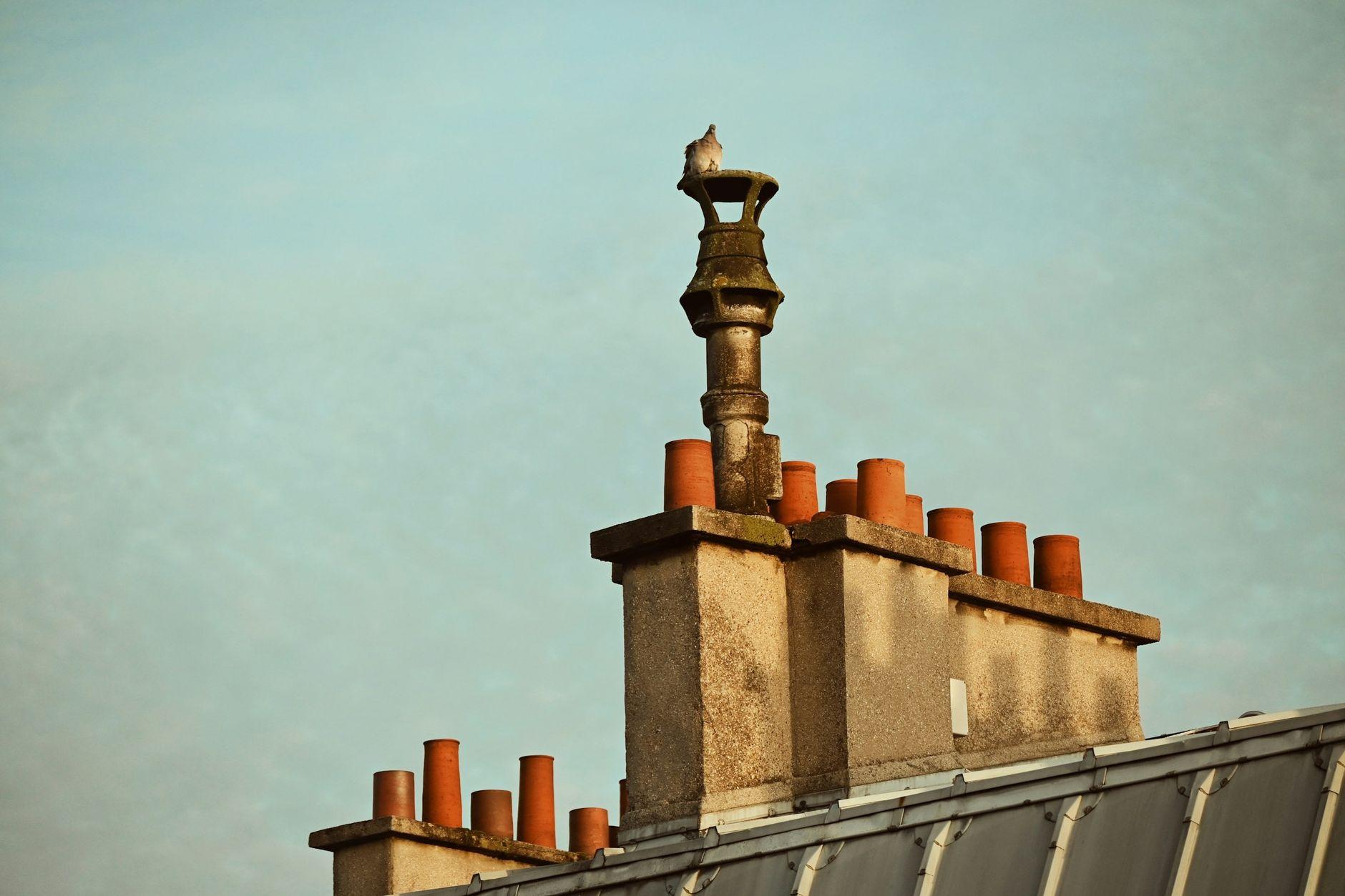
Gray grit in the gutter
The first sign is often not on the chimney at all. It is gray grit and small chunks of mortar in the gutter below it, or a few flakes on the roof after a windy night. Inside, it can show as a damp patch high on the chimney breast, or water dripping onto the damper in a storm with no sign of a leak at the roof line.
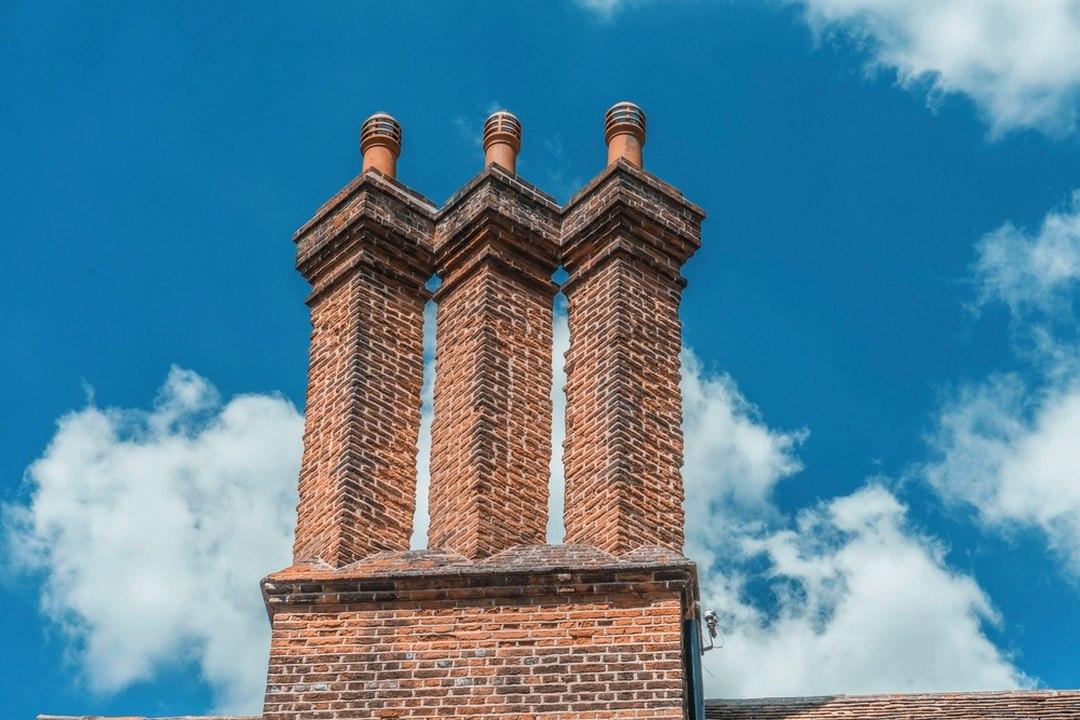
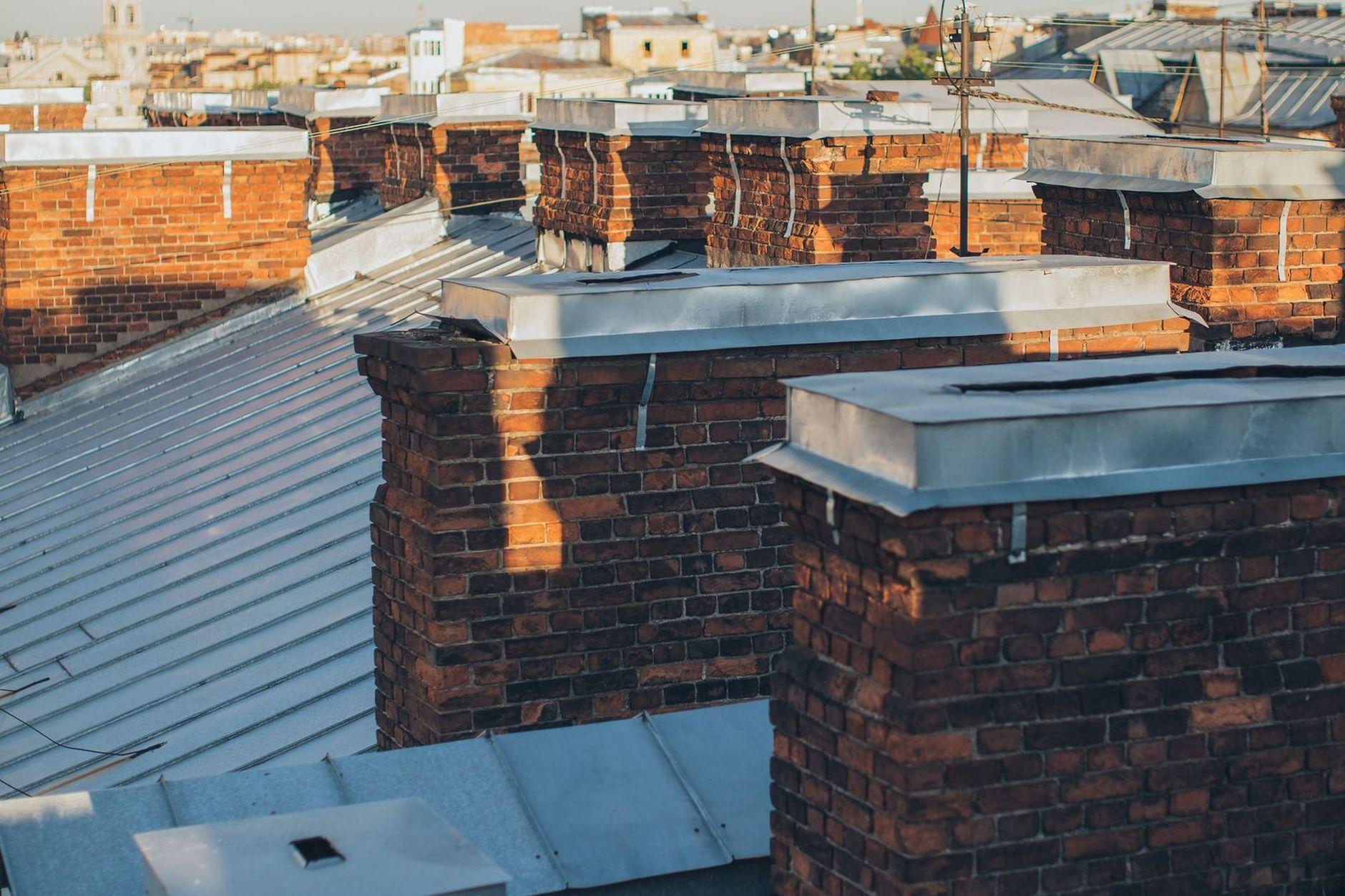
All of these point to the top of the chimney: the slab of concrete or mortar that covers the brick around the flue. On a San Fernando chimney that slab takes direct sun on summer afternoons and cold rain in winter, and over the years it cracks. This post covers what we do about a cracked top, the two repair routes, what decides between them and what it costs to let it go.
Why the top cracks
The slab on top of a chimney has a hard life. It heats and cools faster than the brick below it. The flue tile poking through it expands with every fire. And on many older chimneys the top was never a proper slab in the first place: it was a few inches of leftover mortar troweled flat, with no slope, no overhang and the flue tile set solid into it.
Common causes we see:
- Mortar used where concrete should have been, so it crumbles rather than cracks
- No overhang, so water runs straight down the face of the brick
- The flue tile locked tight into the slab, so heat movement splits it
- Old shaking damage, opened wider by years of weather
Route one: coating over sound concrete
If the slab is solid and the cracks are fine, a flexible coating made for chimney tops can seal them. The coating stretches as the slab moves, which caulk and roof cement do not. It goes on over the whole top, around the flue tile and down the edge.
This works when the slab underneath is still in one piece. Tap it and it sounds solid. Nothing lifts or rocks. The cracks are narrow and do not run all the way through.
Route two: break it out and pour a new one
If the slab is loose, broken through, crumbling or built with no overhang, coating it only hides the problem for a season. The repair is to remove the old top down to the brick and cast a new one in place.
A properly built new top slopes away from the flue on all sides, sticks out past the brick so water drops clear, and leaves the flue tile free to move with a small flexible joint instead of mortar packed tight around it. The brick at the very top is checked once the old slab is off, and any loose bricks are relaid first.
What the price depends on
Crown work has no published price from us, because two chimneys can need very different jobs. The things that move the number:
- Coating or full replacement
- The size of the chimney top and how many flues come through it
- Whether the top courses of brick need relaying first
- How steep the roof is and how hard it is to stage materials
- Whether a cover over the flue goes on at the same time
What we can quote from our published list is the cover itself: quoted on site fitted, depending on its size and how many flues it spans. Many owners put the new cover on with the new top, because the crew and the setup are already there. If the leak has already reached the inside of the flue, a camera check runs $370.
After the visit you get a written price for the route that fits, with photos of the top as we found it.
What waiting costs
A cracked top lets water into the uppermost courses of brick first. Water in brick and mortar breaks both down. The faces of the bricks start to flake, joints open up, and in a few seasons the top of the chimney above the roof is loose. At that point the repair is no longer a top slab. It is taking the chimney down several courses and relaying it before a new top can go on.
Water also runs down inside the chimney to the damper, the smoke shelf and the firebox. A rusted damper and stained firebox walls are common on chimneys with a top that has been cracked for years.
In a strong quake, the top of an older chimney is the part most likely to come loose. A chimney with sound mortar and a solid top holds together better than one already softened by water.
When a coating is the wrong choice
We turn down coating work when the slab underneath is failing. Owners sometimes ask for the cheaper option to get through one winter, but a coating over a loose slab can trap water under it and speed the damage. If coating will not hold, we say so in writing and explain why.
Related reading
See the details of chimney crown repair, chimney cap installation and chimney waterproofing. If water is your main symptom, our post on leak repair prices covers the other sources. Owners in Canoga Park and across the valley see the same wear.
If there is grit in the gutter or a damp spot high on the chimney breast, use the contact page to get the top looked at before the next rain.
Ready to Put a Price on the Fault?
Lanier Chimney Group repairs chimneys and fireplaces from San Fernando. We name the failed part, show you a photo of it and write the price before any work starts.